
Regenerative Lawn Care
At Earth Care, we are transforming how the UK thinks about lawn care. Using regenerative methods, we revive tired lawns by improving soil health, boosting biodiversity, and cutting out synthetic chemicals. The result? A greener, healthier garden that’s safe for kids, pets, and pollinators — and better for the planet. It’s lawn care that gives back.
What is Regenerative Lawn Care?
It’s a way of improving and maintaining your grass plants in a natural manner.
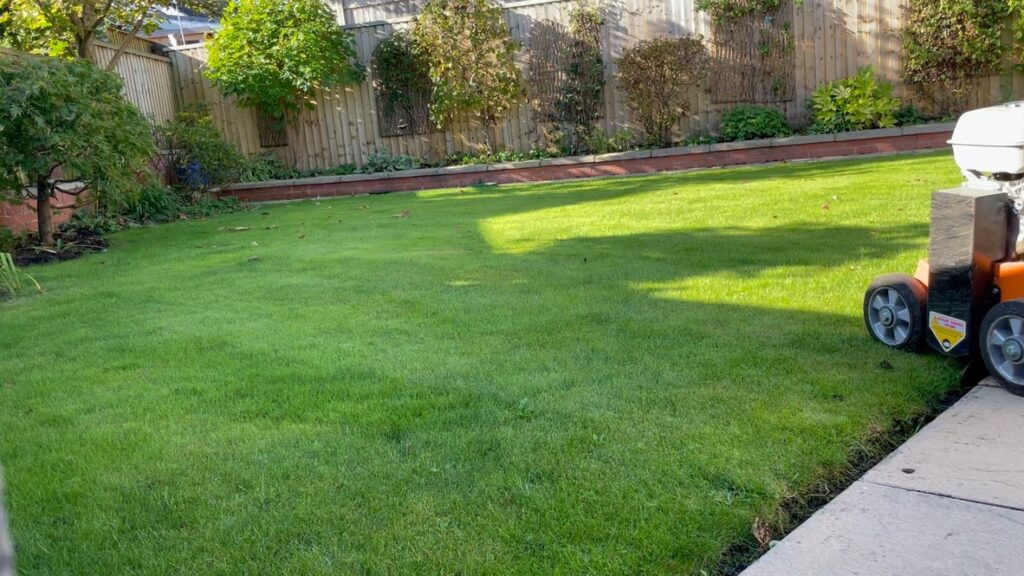
Treatments
Using natural treatments including, Compost Tea, Seaweed, Activated Micro Organisms, Lactic Acid Bacteria, Biochar, Vermi Extract, Vermi Compost, Compost,
Weed Analysis
Using a thorough check of your lawn and listing visible weeds, they are used as a guide towards lawn improvement. Each weed is telling you a story about the current soil conditions.
Soil Tests
A series of tests are carried out to help set up a specific diagnosis of your soil conditions, and so guide the treatments going forward. Rather than a one size fits all each treatment cycle is specific to your conditions.
Compaction Test
This is to test how compacted the soil profile is. This can have a huge affect on the soil, as the more compacted the harder it is for moisture and air to enter, which are both imperative to good root growth.
At Earth Care, we bring together time-honoured gardening principles with modern, regenerative techniques to care for your lawn the natural way. By analysing the weeds that appear, we use them as a guide to tailor future treatments, and we continually read and understand the soil to track how it responds and evolves over time. We enrich the ground, encourage deep-rooted grass, and promote a thriving ecosystem — all without relying on harsh chemicals. The result is a classic British lawn: healthy, resilient, and beautifully green, season after season.
The Process
Carry out a thorough inspection of your lawn and more importantly your soil. Find out your requirements and wants for the area.
The assessment includes a list of weeds, soil condition, texture and compaction, worm populations, pH, Electrical Conductivity, grass root depth, any other indicators or visible issues.
Common Issues in lawns in Derbyshire.
Common patterns you may encounter:
Heavy clay compaction
Low biological activity
Acidic soil (pH 5.2–5.8)
Moss linked to shade + drainage
Shallow root systems
Thatch from synthetic feeding history