How to get rid of Moss in a Lawn
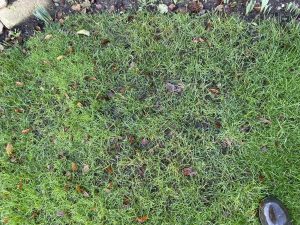
Moss in a Lawn
What is Moss?
Moss is a simple, non-vascular plant (a bryophyte) that reproduces by spores rather than seed. It doesn’t have true roots like grass — instead it has tiny structures (rhizoids) that anchor it to the soil surface. Moss thrives in damp, shaded, low-fertility environments and can outcompete weak turf in those conditions.
Importantly: moss is a symptom, not the root problem.
What Causes Moss in Lawns? (Common in Derbyshire)
Derbyshire’s rainfall patterns, heavier clay soils, and cooler conditions can create ideal moss environments.
The key drivers are:
Compacted Soil
- Common on clay-based soils.
- Reduces oxygen in the root zone.
- Grass struggles; moss tolerates it.
Poor Drainage
- Waterlogged or persistently damp surfaces.
- Moss thrives in moisture.
Low Soil Fertility
- Especially low nitrogen.
- Weak turf density allows moss colonisation.
Excess Shade
- Trees, buildings, north-facing lawns.
- Reduced photosynthesis weakens grass.
Low Soil Biology
- Fungal-dominant, stagnant, or low microbial diversity soils.
- Poor nutrient cycling.
Acidic Conditions (occasionally)
- Moss tolerates lower pH better than most turfgrasses.
- However, pH is often over-blamed in the UK.
Killing Moss !!
Unfortunately there aren’t any products available that actually are a “Moss in Lawn Killer”. Iron dries it up and stops it spreading, but ideally this has to be removed from the surface, because the spores are still viable.
Once conditions favour it, off it will go again. This is why it’s better to treat the Moss as a symptom and try and correct the things in your lawn that are allowing it to take hold.
How to get rid of Moss in a lawn
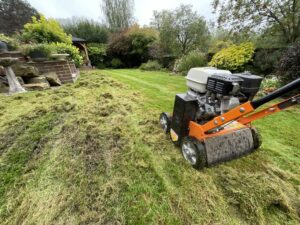
Using Iron helps to reduce it, this dries it up, but if left it tends to return as soon as the weather and conditions favour it. So the quickest way to get on top of the Moss is to use Iron in one form and then after a couple of weeks rake it out, either by hand or mechanical means.
Regenerative Lawn Care Approach to Moss
Instead of “kill and remove,” the regenerative framework focuses on correcting soil function.
1. Relieve Compaction
- Hollow-tine aeration (autumn or spring).
- Follow with:
- Light compost topdressing
- Humic substances
- Bio-stimulant applications (e.g., seaweed, fish hydrolysate)
This increases oxygen and stimulates microbial activity.
2. Improve Soil Biology
Monthly applications (April–October) could include:
- Compost extract or quality compost tea
- Seaweed extract
- Fulvic/humic acids
- Small amounts of nitrogen in a biological form
Stronger microbial activity improves nutrient cycling and turf density.
3. Increase Turf Density (Outcompete Moss)
- Overseed with perennial ryegrass / fescue mix suited to UK climate.
- Apply during soil temps above 8–10°C.
- Maintain cutting height slightly higher (35–45mm).
Dense turf shades moss out naturally.
4. Manage Shade Where Possible
- Light tree pruning.
- Avoid scalping shaded areas.
- Use shade-tolerant seed mixes.
5. Drainage & Surface Management
- Brush off heavy dew in high-moss periods.
- Avoid over-irrigation (if irrigating at all in Derbyshire).
- Encourage deeper rooting rather than shallow growth.
What About Iron Treatments?
Iron sulphate will blacken moss quickly.
However:
- It does not solve compaction.
- It does not improve soil structure.
- It can harm soil biology if overused.
In regenerative systems, iron is used sparingly — mainly as a short-term aesthetic correction while soil function is being restored.
The Regenerative Mindset
Moss declines when:
- Soil breathes.
- Biology functions.
- Grass is dense.
- Water moves through the profile.
Rather than fighting moss directly, you build a system where grass becomes the dominant species naturally.
If you’d like, I can:
- Build a moss-recovery plan fitted into your April–October monthly visits in Derbyshire
- Or outline a “moss-heavy lawn” first-year regeneration protocol